Life Cycle Assessment (LCA)

- Description
- Reviews
- Grade

-
1
 What is Life Cycle Thinking?
What is Life Cycle Thinking
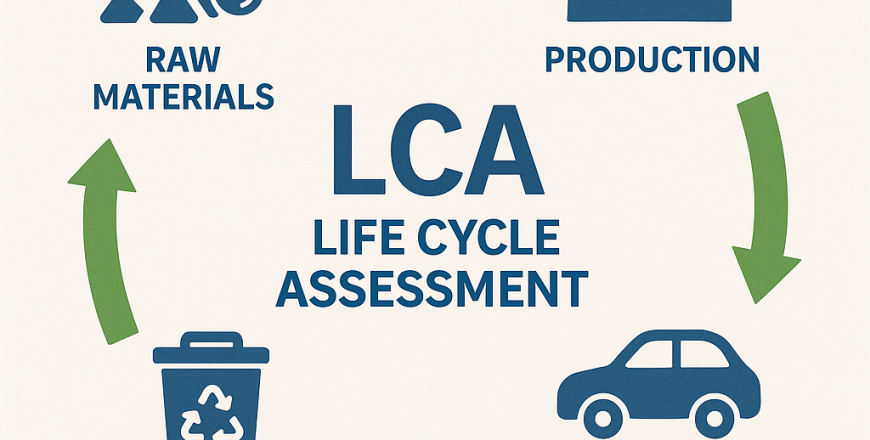
This course introduces Life Cycle Thinking (LCT)—a holistic approach to evaluating the environmental impacts of a product, service, or process across its entire life cycle, from raw material extraction to end-of-life disposal. Participants will learn how LCT helps identify hidden environmental costs, supports sustainable decision-making, and complements tools like Life Cycle Assessment (LCA). The course emphasizes the importance of systems thinking in reducing resource use, minimizing emissions, and promoting circular economy principles across supply chains.
-
2
Principles and scope of LCA
Principles and Scope of Life Cycle Assessment (LCA)
This course covers the foundational principles and scope of Life Cycle Assessment (LCA), a standardized methodology used to evaluate the environmental impacts of products or services throughout their life cycle. Participants will explore the four key phases of LCA—goal and scope definition, inventory analysis, impact assessment, and interpretation—as outlined in ISO 14040 and 14044. The course emphasizes transparency, scientific rigor, and system boundaries, providing learners with the tools to apply LCA for sustainable product design, regulatory compliance, and informed environmental decision-making.
-
3
The four phases of LCA (as per ISO 14040)
The Four Phases of Life Cycle Assessment (LCA) – As per ISO 14040
This course provides an in-depth exploration of the four standardized phases of LCA defined by ISO 14040:
-
Goal and Scope Definition – Establishes the purpose, system boundaries, and functional unit of the study to ensure clarity and relevance.
-
Life Cycle Inventory (LCI) Analysis – Involves data collection and quantification of inputs and outputs (energy, materials, emissions) across the product’s life cycle.
-
Life Cycle Impact Assessment (LCIA) – Evaluates the potential environmental impacts based on the inventory data, linking emissions and resource use to categories like climate change, toxicity, and resource depletion.
-
Interpretation – Integrates findings to draw conclusions, identify improvement opportunities, and support informed, transparent decision-making.
-
-
4
Applications Across Industries
Applications Across Industries
This course explores how Life Cycle Assessment (LCA) and sustainability practices are applied across various industries—such as manufacturing, construction, agriculture, energy, and consumer goods. Participants will learn how different sectors use LCA to reduce environmental impacts, improve resource efficiency, meet regulatory requirements, and support eco-design and green innovation.
-
5
Goal and Scope Definition
LCA Goal and Scope Definition
This course focuses on the first phase of Life Cycle Assessment (LCA): defining the goal and scope. Participants will learn how to clearly establish the purpose of the assessment, set system boundaries, choose a functional unit, and identify key assumptions. This foundational step ensures that the LCA is aligned with its intended use, whether for product development, policy-making, or sustainability reporting.
-
6
Life Cycle Inventory (LCI): Data Collection and Modeling
Life Cycle Inventory (LCI): Data Collection and Modeling
This course delves into the Life Cycle Inventory (LCI) phase of LCA, focusing on the systematic collection and modeling of data related to energy use, material inputs, emissions, and waste throughout a product’s life cycle. Participants will learn techniques for sourcing reliable data, handling data gaps, and building accurate process models to ensure robust and credible environmental assessments.
-
7
Life Cycle Impact Assessment (LCIA): Midpoints, Endpoints, and Methods
Life Cycle Impact Assessment (LCIA): Midpoints, Endpoints, and Methods
This course explores the Life Cycle Impact Assessment (LCIA) phase of LCA, focusing on how environmental impacts are quantified and interpreted. Participants will learn about midpoint indicators (e.g., global warming potential) and endpoint indicators (e.g., damage to human health or ecosystems), as well as common assessment methods such as ReCiPe, TRACI, and CML. The course provides practical guidance on selecting appropriate impact categories and methods to support meaningful sustainability decisions.
-
8
Interpretation: Uncertainty, Sensitivity, and Quality Checks
Interpretation: Uncertainty, Sensitivity, and Quality Checks
This course covers the final phase of LCA—Interpretation—focusing on how to draw reliable conclusions by addressing uncertainty, conducting sensitivity analysis, and performing quality checks. Participants will learn to evaluate the robustness of results, identify critical assumptions, and ensure the assessment meets its stated goals. The course equips learners to make transparent, data-driven decisions and communicate findings effectively.
-
9
Critical Review and Reporting According to ISO Standards
Critical Review and Reporting According to ISO Standards
This course guides learners through the critical review and reporting requirements of LCA based on ISO 14044 standards. It covers when a third-party review is necessary, how to ensure transparency and consistency, and best practices for documenting assumptions, data sources, and limitations. Participants will gain the skills to prepare LCA reports that are credible, audit-ready, and suitable for stakeholders, regulatory bodies, or public disclosure.
-
10
Manufacturing and Product Design
Manufacturing and Product Design
This course explores how Life Cycle Thinking and LCA are applied in manufacturing and product design to minimize environmental impact, enhance resource efficiency, and support sustainable innovation. Participants will learn to integrate eco-design principles, select low-impact materials, and optimize production processes to reduce emissions and waste across a product’s life cycle.
-
11
Construction and Green Buildings
Construction and Green Buildings
This course examines the application of Life Cycle Assessment (LCA) and sustainability principles in the construction and green building sectors. It covers evaluating materials, energy use, and environmental impacts from design to demolition, helping participants understand how to optimize building performance, reduce carbon footprints, and meet green certification standards such as LEED and BREEAM.
-
12
Energy Systems and Renewable Technologies
Energy Systems and Renewable Technologies
This course focuses on applying Life Cycle Assessment (LCA) to energy systems and renewable technologies, such as solar, wind, bioenergy, and hydropower. Participants will learn to assess the full environmental impact of energy generation—from resource extraction to system decommissioning—and compare conventional and renewable options to support low-carbon energy transitions and sustainable energy planning.
-
13
Agriculture and Food Supply Chains
Agriculture and Food Supply Chains
This course explores the use of Life Cycle Assessment (LCA) in agriculture and food supply chains to evaluate environmental impacts such as greenhouse gas emissions, water use, and land degradation. Participants will learn how to apply LCA to crop and livestock systems, food processing, packaging, and distribution, enabling more sustainable farming practices and informed choices across the food value chain.
-
14
Electronics, ICT, and Consumer Goods
Electronics, ICT, and Consumer Goods
This course examines the application of Life Cycle Assessment (LCA) in the electronics, information and communication technology (ICT), and consumer goods sectors. Participants will learn how to assess environmental impacts from raw material extraction to end-of-life, optimize product design for energy efficiency and recyclability, and support sustainable innovation, compliance, and circular economy initiatives.
-
15
Healthcare, Packaging, and Circular Economy Examples
Healthcare, Packaging, and Circular Economy Examples
This course highlights real-world applications of Life Cycle Assessment (LCA) in healthcare, packaging, and circular economy models. Participants will explore how LCA helps evaluate the environmental trade-offs of medical products, sustainable packaging solutions, and material recovery systems—demonstrating how life cycle thinking supports waste reduction, resource efficiency, and sustainable innovation across sectors.
-
16
Review of Real LCA Reports and Case Studies
Review of Real LCA Reports and Case Studies
This course provides a practical review of real-world LCA reports and case studies from various industries, illustrating how methodologies are applied in practice. Participants will analyze report structures, data presentation, impact results, and interpretation techniques, gaining insights into best practices, common challenges, and lessons learned in conducting and communicating effective Life Cycle Assessments.
-
17
Linking LCA to the UN SDGs and Circular Economy Goals
Linking LCA to the UN SDGs and Circular Economy Goals
This course explores how Life Cycle Assessment (LCA) supports alignment with the United Nations Sustainable Development Goals (SDGs) and drives progress toward circular economy objectives. Participants will learn to map LCA outcomes to specific SDG targets, identify synergies, and use life cycle data to inform strategies that reduce waste, enhance resource efficiency, and promote sustainable development across value chains.
-
18
LCA and ESG: Integration with GRI, CDP, TCFD, and ISSB
LCA and ESG: Integration with GRI, CDP, TCFD, and ISSB
This course focuses on integrating Life Cycle Assessment (LCA) into broader Environmental, Social, and Governance (ESG) reporting frameworks, including GRI, CDP, TCFD, and ISSB. Participants will learn how to align life cycle data with sustainability disclosures, enhance transparency, and support climate-related risk management and strategic decision-making through evidence-based environmental performance reporting.
-
19
Scope 3 Emissions and Supply Chain Assessments Using LCA
Scope 3 Emissions and Supply Chain Assessments Using LCA
This course delves into the use of Life Cycle Assessment (LCA) to quantify and manage Scope 3 emissions across the supply chain. Participants will learn how to identify indirect emissions sources, collect upstream and downstream data, and apply LCA to improve supply chain transparency, reduce carbon footprints, and support science-based climate targets and sustainable procurement strategies.
-
20
Tools, Software, and Databases (e.g., SimaPro, GaBi, Ecoinvent)
Tools, Software, and Databases (e.g., SimaPro, GaBi, Ecoinvent)
This course introduces key LCA tools and databases, including SimaPro, GaBi, and Ecoinvent, used for modeling and analyzing environmental impacts. Participants will learn how to navigate these platforms, select appropriate datasets, and perform robust life cycle calculations to support accurate, data-driven sustainability assessments across products and processes.
-
21
The Future of LCA: Digitalization, Real-Time Assessment, and AI
The Future of LCA: Digitalization, Real-Time Assessment, and AI
This course explores emerging trends shaping the future of Life Cycle Assessment (LCA), including digitalization, real-time environmental monitoring, and the integration of artificial intelligence (AI). Participants will learn how advanced technologies are enhancing data collection, modeling accuracy, and decision-making speed—enabling more dynamic, responsive, and scalable sustainability assessments across industries.
