Emotional Intelligence

- Description
- Curriculum
- Reviews
-
1
 What is Emotional Intelligence?
Course Description – What is Emotional Intelligence?
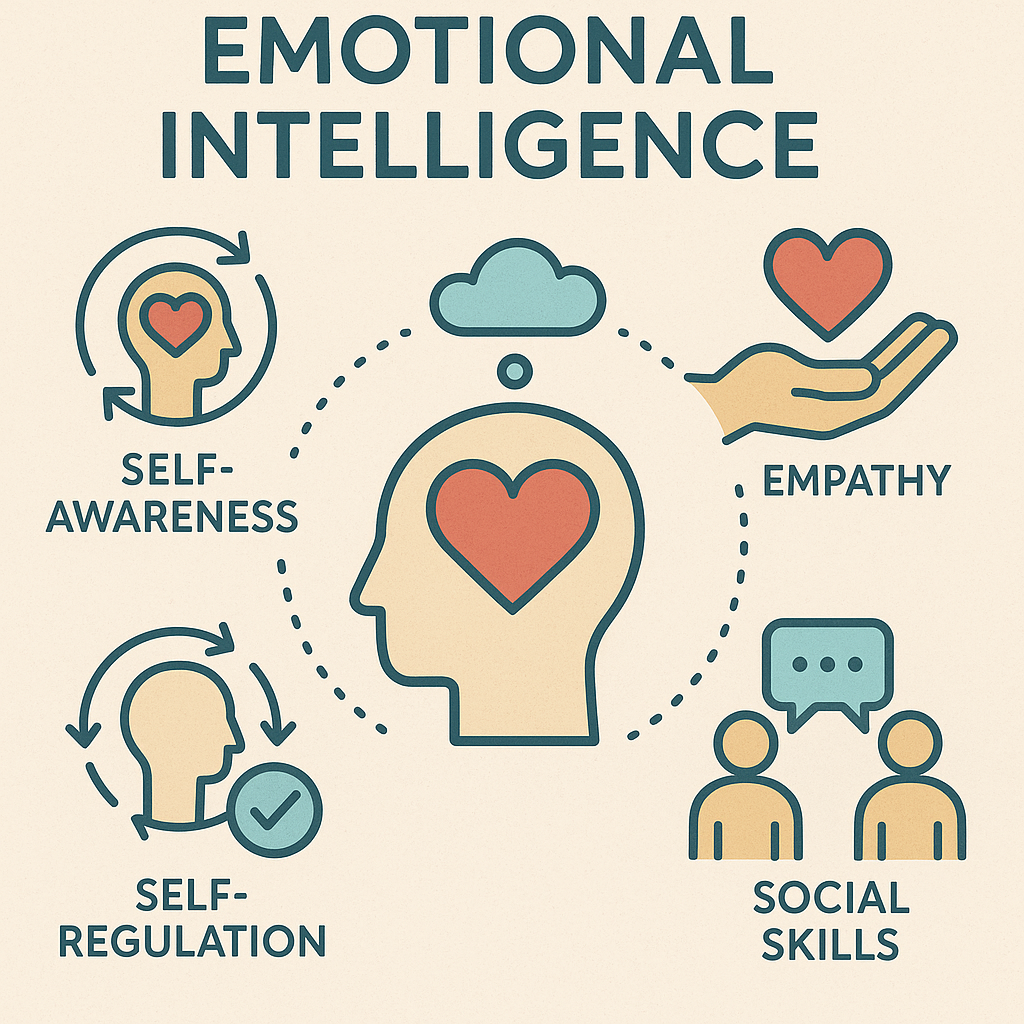
This module provides an advanced introduction to Emotional Intelligence (EI), exploring its scientific foundations, core components, and real-world significance. Learners will examine the five key domains—self-awareness, self-regulation, motivation, empathy, and social skills—through the lens of neuroscience, leadership, and behavioral psychology. The course emphasizes how EI influences decision-making, relationships, and performance in complex, high-stakes environments.
-
2
The Science Behind Emotions
The Science Behind Emotions
This course explores the biological, psychological, and neurological foundations of human emotions. Participants will learn how emotions are generated in the brain, the role of hormones and neurotransmitters, and how emotional responses influence behavior, decision-making, and interpersonal interactions. The course lays the groundwork for understanding emotional intelligence and self-regulation.
-
3
Daniel Goleman’s EI Model (Self-awareness, Self-regulation, Motivation, Empathy, Social skills)
Daniel Goleman’s EI Model
This course delves into Daniel Goleman’s Emotional Intelligence (EI) Model, focusing on its five key components: Self-awareness, Self-regulation, Motivation, Empathy, and Social Skills. Participants will explore how these competencies contribute to personal and professional effectiveness, enhance leadership, and improve communication and relationships.
-
4
Emotional vs. Intellectual Intelligence
Emotional vs. Intellectual Intelligence
This course compares Emotional Intelligence (EQ) and Intellectual Intelligence (IQ), highlighting how each influences success, communication, and decision-making. Participants will understand the distinct roles of emotion and cognition in human behavior and why EQ is often a stronger predictor of effective leadership, collaboration, and adaptability in today’s workplaces.
-
5
Why EI Matters in Life and Work
Why Emotional Intelligence Matters in Life and Work
This course explains the critical role of Emotional Intelligence (EI) in both personal and professional success. Participants will learn how EI enhances communication, leadership, conflict resolution, and stress management, while also fostering stronger relationships, greater resilience, and better mental well-being in everyday life and workplace environments
-
6
Building Self-Awareness: Recognizing Emotional Triggers
Building Self-Awareness: Recognizing Emotional Triggers
This course focuses on developing self-awareness by helping participants identify their emotional triggers and understand how these affect thoughts, behaviors, and reactions. Through reflection and practical exercises, learners will build the foundation for emotional regulation, improved decision-making, and stronger interpersonal interactions.
-
7
Self-Regulation Strategies: Managing Stress and Impulses
Self-Regulation Strategies: Managing Stress and Impulses
This course teaches effective self-regulation techniques to manage stress and control impulsive behaviors. Participants will explore strategies such as mindfulness, cognitive reframing, and emotional pause to enhance emotional control, promote resilience, and maintain focus and composure in challenging situations.
-
8
Developing Intrinsic Motivation
Developing Intrinsic Motivation
This course explores the concept of intrinsic motivation—the drive to engage in activities for their own sake rather than external rewards. Participants will learn strategies to cultivate passion, purpose, and a growth mindset, fostering long-term motivation, self-discipline, and sustained achievement both personally and professionally.
-
9
Emotional Agility and Mindfulness
Emotional Agility and Mindfulness
This course focuses on developing emotional agility through mindfulness practices. Participants will learn how to navigate emotions with flexibility, respond thoughtfully to challenges, and build resilience. By integrating mindfulness techniques, learners will enhance their ability to stay present, reduce stress, and make more intentional, adaptive decisions in both personal and professional settings.
-
10
Enhancing Personal Resilience
Enhancing Personal Resilience
This course equips participants with tools to build personal resilience, enabling them to adapt positively to stress, setbacks, and adversity. Through emotional intelligence, mindset training, and coping strategies, learners will strengthen their capacity to recover quickly, maintain well-being, and thrive in challenging environments.
-
11
Empathy: Understanding Others’ Emotions
Empathy: Understanding Others’ Emotions
This course explores the skill of empathy—the ability to recognize, understand, and share the feelings of others. Participants will learn how empathy enhances communication, deepens relationships, and supports inclusive, emotionally intelligent leadership in both personal and professional settings
-
12
Active Listening and Non-verbal Cues
Active Listening and Non-verbal Cues
This course teaches the fundamentals of active listening and interpreting non-verbal communication to improve understanding and connection in conversations. Participants will develop skills to listen with attention and empathy, read body language and facial expressions, and respond in ways that foster trust and effective interpersonal communication.
-
13
Building Trust and Rapport
Building Trust and Rapport
This course focuses on developing the skills needed to build trust and establish rapport in both personal and professional relationships. Participants will learn techniques such as authenticity, consistency, empathy, and effective communication to foster deeper connections, enhance collaboration, and create psychologically safe environments.
-
14
Conflict Resolution and Emotional Boundaries
Conflict Resolution and Emotional Boundaries
This course explores strategies for resolving conflicts constructively while maintaining healthy emotional boundaries. Participants will learn how to manage difficult emotions, communicate assertively, and navigate disagreements with empathy and clarity—promoting mutual respect, reduced tension, and sustainable relationship dynamics.
-
15
Influencing Without Authority
Influencing Without Authority
This course teaches techniques to effectively influence others and drive collaboration without relying on formal authority. Participants will learn how to leverage emotional intelligence, communication skills, credibility, and strategic relationship-building to inspire action, gain support, and lead through influence in team and organizational settings.
-
16
EI in Leadership and Management
Emotional Intelligence in Leadership and Management
This course explores how emotional intelligence (EI) enhances leadership and management effectiveness. Participants will learn to lead with empathy, build emotionally intelligent teams, navigate conflict, and foster a positive organizational culture—ultimately improving decision-making, employee engagement, and performance.
-
17
EI for Teams and Collaboration
EI for Teams and Collaboration
This course focuses on applying emotional intelligence (EI) to enhance teamwork and collaboration. Participants will learn to foster trust, navigate group dynamics, manage interpersonal tensions, and communicate empathetically—building stronger, more cohesive, and high-performing teams. -
18
EI in Customer Service and Client Relations
Emotional Intelligence in Customer Service and Client Relations
This course teaches how emotional intelligence (EI) can improve customer service and client interactions. Participants will learn to manage emotions under pressure, practice empathy, and communicate effectively—leading to stronger client relationships, increased satisfaction, and enhanced service experiences.
-
19
Emotional Intelligence for Career Development
Emotional Intelligence for Career Development
This course explores how emotional intelligence (EI) contributes to career growth and professional success. Participants will learn to harness self-awareness, resilience, interpersonal skills, and emotional regulation to navigate workplace challenges, build strong networks, and make strategic career decisions. -
20
Cultivating an Emotionally Intelligent Workplace Culture
Cultivating an Emotionally Intelligent Workplace Culture
This course focuses on creating a workplace culture rooted in emotional intelligence. Participants will learn strategies to promote empathy, psychological safety, effective communication, and emotional well-being—fostering a more engaged, collaborative, and resilient organizational environment.


